
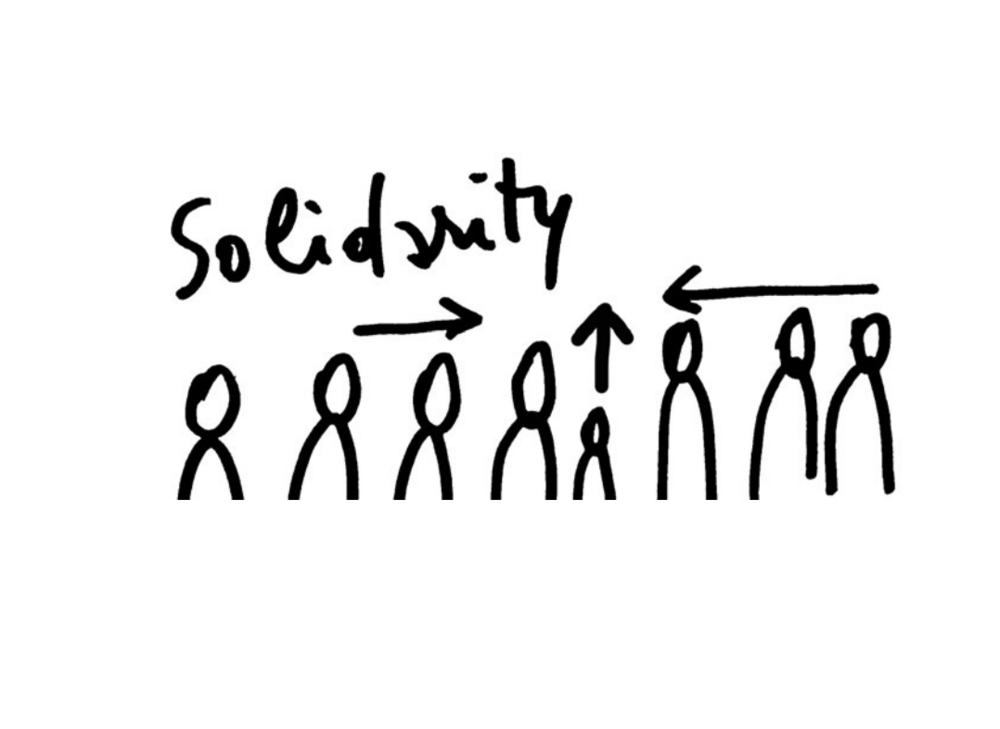
Finding A New Meaning of Solidarity In The Time of Populism

In recent years, the rise of populist movements across the globe has reshaped political, social, and economic landscapes. Characterized by an appeal to “the people” against perceived elites, populism often simplifies complex societal issues into binaries of insiders versus outsiders, us versus them. While these movements claim to champion the common citizen, they can simultaneously erode traditional forms of solidarity by fostering exclusionary politics, scapegoating minorities, and privileging nationalism over community cohesion.
The Fracturing of Solidarity
Solidarity, traditionally understood as the recognition of interdependence and collective responsibility, faces new challenges under populist regimes. Populist rhetoric often exploits existing social cleavages—whether based on ethnicity, religion, caste, or class—turning citizens against each other rather than encouraging mutual support. For instance, in India, the mobilization of caste and religious identity under political populism has strained historically solidaristic networks among marginalized communities, forcing them to navigate both political and social marginalization. Similarly, in Europe and North America, populist discourses around immigration and nationalism have created divides that undermine broader labor solidarity and social welfare coalitions.
Reimagining Solidarity
In response, scholars and activists argue that solidarity must be redefined to address contemporary challenges. This “new solidarity” is less about uniformity and more about intersectional alliances that acknowledge differences while pursuing shared goals. For marginalized groups, including Dalits in India or racialized communities in Western contexts, this means forming coalitions across social and economic divides, leveraging collective identity to resist oppression without erasing individual experiences.
Grassroots movements provide practical examples. In India, Dalit advocacy networks have increasingly allied with feminist, environmental, and labor organizations, reframing solidarity as a multidimensional commitment to social justice rather than a singular political loyalty. Globally, initiatives such as the Fight for $15 in the US or migrant labor collectives in Europe illustrate how solidarity can emerge among diverse groups facing structural inequities, even amid populist opposition.
Challenges and Possibilities
Rebuilding solidarity in the age of populism is not without obstacles. Populist governments often deploy surveillance, legal restrictions, or propaganda to weaken alliances across communities. Moreover, social media, while offering platforms for mobilization, can also amplify divisions through algorithmic echo chambers. Yet, these very tools can be harnessed creatively to foster awareness, amplify marginalized voices, and coordinate collective action.
The pandemic further demonstrated both the fragility and potential of solidarity. While lockdowns exposed inequalities and social isolation, they also inspired new forms of mutual aid—community-run food banks, neighborhood support networks, and digital solidarity campaigns—that transcended traditional political or nationalistic boundaries.
In an era dominated by populist narratives, solidarity cannot simply be assumed; it must be actively cultivated, reimagined, and defended. This requires a shift from homogeneous notions of community toward intersectional, adaptable forms of collaboration that prioritize justice, equity, and inclusion. For societies grappling with rising inequality, polarization, and identity-based exclusion, a renewed understanding of solidarity offers a pathway to resilience, social cohesion, and meaningful collective action.

+ There are no comments
Add yours